
EV Infrastructure in India 2026: Charging Stations, Battery Recycling and the Green Mobility Revolution
India crosses 25000 EV charging stations in 2026 with FAME III push and battery recycling startups leading green mobility.
By Editorial Desk
EV Infrastructure in India 2026: Charging Stations, Battery Recycling and the Green Mobility Revolution
The year 2026 will be remembered as the tipping point for electric vehicles in India. What started as a niche market for early adopters has now become a mass movement, driven by strong government support, falling battery prices, and a massive expansion of charging infrastructure. One of the most important business trends in India today is the expansion of the EV ecosystem, which is driving significant investments in EV charging stations and battery recycling across the urban and rural landscape.
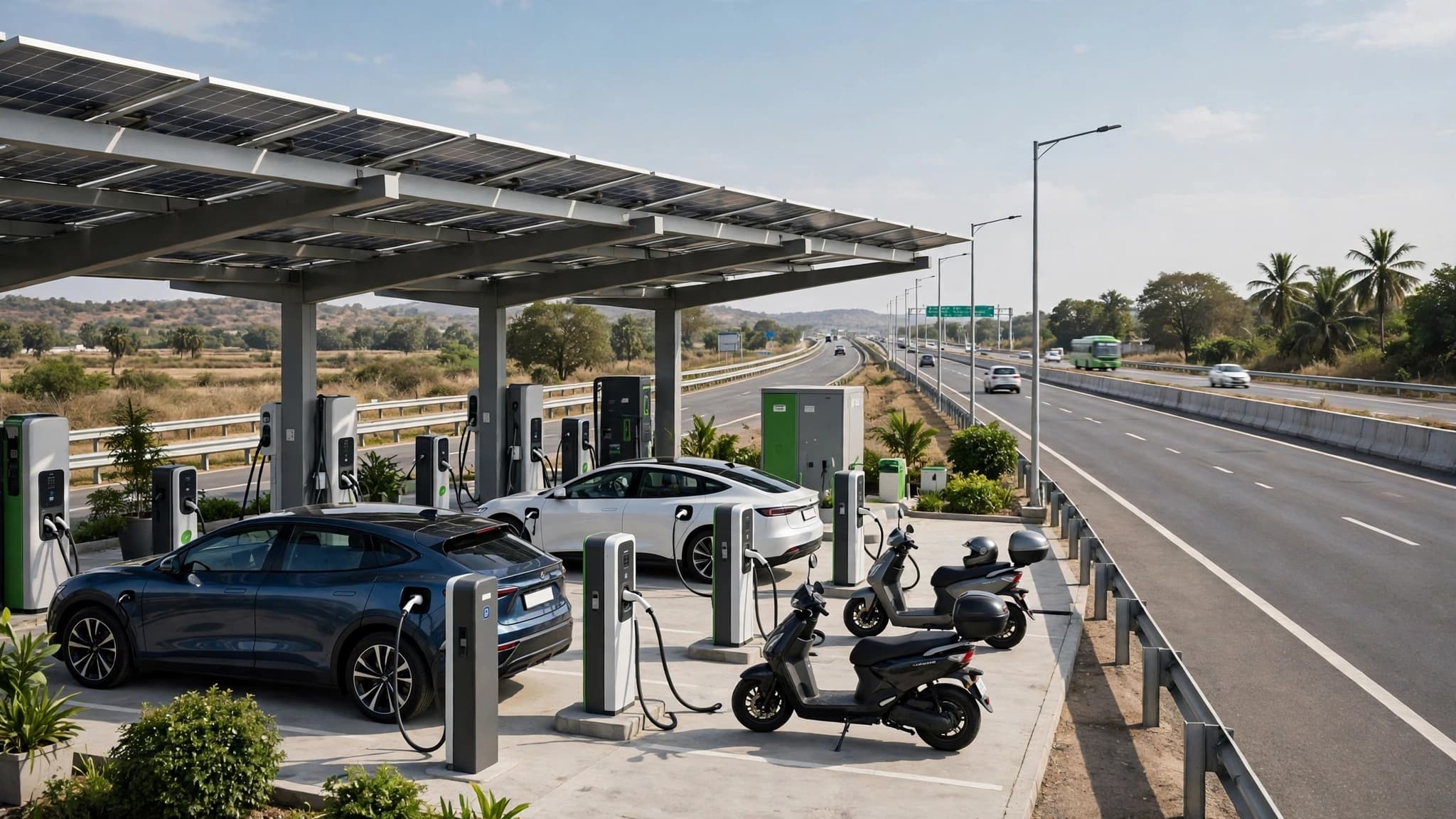
The Government of India has been heavily pushing domestic manufacturing under the Make in India initiative while simultaneously reducing the country's carbon footprint. The FAME III scheme and state-level EV policies have provided subsidies not just for buying EVs but also for setting up charging infrastructure. As of October 2026, India has crossed over 25,000 public charging stations, up from just 6,000 in 2023. Major highways like Delhi-Jaipur, Mumbai-Pune, and Bangalore-Chennai now have fast chargers every 50 kilometres, eliminating range anxiety which was the biggest barrier for adoption.
This infrastructure growth has triggered a chain reaction in related industries. Battery recycling is emerging as a multi-billion dollar opportunity. An EV battery lasts about 6-8 years, after which its capacity drops to 70-80%. Instead of throwing these batteries away, companies are now repurposing them for stationary energy storage for homes and shops, and recycling valuable materials like lithium, cobalt, and nickel. Startups like Attero and Lohum in Noida are leading this revolution, creating a circular economy that reduces dependence on imported raw materials. The government’s Battery Waste Management Rules 2022 are now being strictly enforced, making recycling mandatory and profitable.
For consumers, the economics of EVs have become undeniable. With petrol prices hovering around Rs. 105-110 per litre in most cities and electricity costing just Rs. 8-10 per unit, the running cost of an electric scooter is about Rs. 0.25 per kilometre compared to Rs. 2.5 for a petrol scooter. This 10x saving is why delivery partners for Swiggy, Zomato, Zepto, and Amazon have almost completely switched to electric two-wheelers. A delivery executive in Hyderabad can save up to Rs. 8,000 per month just on fuel, which directly increases his take-home income.
The commercial vehicle segment is also transforming. E-rickshaws have been common for years, but now we are seeing electric three-wheelers for cargo, electric small commercial vehicles from Tata and Mahindra, and even electric buses in cities like Delhi, Pune, and Kochi. The Delhi government recently announced that all new buses will be electric by 2027. This shift is not just good for the environment; it is also significantly reducing noise and air pollution in congested Indian cities.
From a business and blogging perspective, the EV ecosystem offers numerous AdSense-safe content opportunities. Topics like "Best Electric Scooters Under Rs. 1 Lakh in India 2026," "How to Start an EV Charging Station Business," "EV Battery Maintenance Tips," and "Government Subsidy for EV in Maharashtra 2026" have high search volume and low competition. Affiliate opportunities include tie-ups with EV accessory brands, insurance providers, and charging solution companies.
The challenges are still there, such as the need for more skilled technicians to service EVs and the proper disposal of old batteries. But the direction is clear. India is not just adopting EVs; it is becoming a global hub for EV manufacturing and technology. With global capability centres expanding and higher headcounts in R&D, Indian engineers are designing EV solutions for the world.
In conclusion, the EV infrastructure boom in India in 2026 is about more than just cars. It is about energy independence, cleaner air, job creation, and building a sustainable future. For anyone looking to invest, work, or create content in this space, the time is now.