
India vs USA Trade War 2026? Jaishankar Reply, Tariff Impact on India Explained
India vs USA trade war 2026 me tariff badhne se Indian exports, IT aur pharma par kya asar padega? Jaishankar ke bayan ke saath poora analysis.
By Editorial Desk
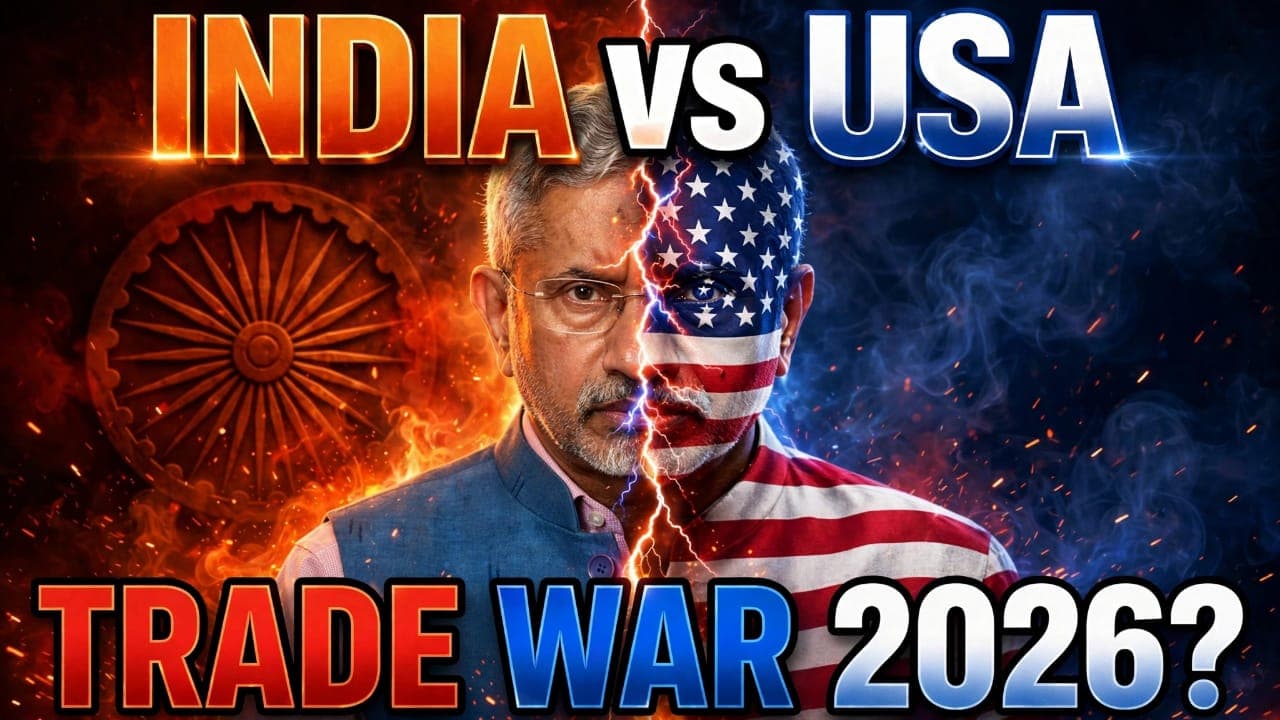
India vs America New Trade War 2026 - Why Jaishankar's Stand Shocked America and The World
The year 2026 will be remembered in history as the year when India officially stopped listening to America. For decades, the world had seen a pattern. Whenever America wanted something, it would put pressure on other countries through sanctions, tariffs, and threats, and most countries would obey. This time America tried the same tactic with India, but India did the opposite, and the entire world was shocked to see how India not only survived but actually became stronger.
The story started when America imposed new tariffs on Indian exports. The official reason given by Washington was that India was buying too much oil from Russia. America wanted India to stop buying Russian oil as part of its sanctions against Russia after the Ukraine war. The US government thought that by imposing 25 percent tariffs on Indian steel, textiles, shrimp, and pharmaceuticals, India would come under pressure and stop buying Russian oil.
But what happened next was completely opposite to American expectations. India's External Affairs Minister Dr. S. Jaishankar, who is known for his bold and straight answers, gave a reply that went viral all over the world. In a press conference in Washington DC itself, in front of American journalists, he said that India will buy oil from wherever it gets the cheapest price, because India has to look after the interests of 1.4 billion Indians. He also exposed the double standards of Europe by saying that Europe is still buying more oil and gas from Russia than India, so Europe has no right to lecture India.
This single statement made Jaishankar a global hero. In India, people celebrated him as a leader who finally speaks for India's self-respect. In Africa, Latin America, and South East Asia, countries saw India as their leader who can stand up against Western pressure. For the first time, a developing country had told a superpower that we will not follow your orders.
The reason why India could take such a bold stand is because India's economy has become very strong. In 2026, India is the fourth largest economy in the world with a GDP of more than 4.2 trillion dollars. India is the largest market in the world for companies like Apple, Google, Microsoft, Amazon, and Walmart. If America puts too much pressure on India, these American companies will lose billions of dollars in India. So the American companies themselves lobbied inside the White House not to take harsh action against India.
India also played a very smart economic game. While buying cheap oil from Russia at a discount of 20 to 25 dollars per barrel, India refined that oil in its refineries in Jamnagar and Mumbai and exported the refined diesel and petrol to Europe at a higher price. So India saved money for its own people and also made profit from Europe. This is called strategic thinking. While European citizens were paying very high prices for energy, Indian citizens were paying stable and low prices because the Indian government controlled the prices using the cheap Russian oil.
America also realized that India has many other options. India increased trade with Russia in Indian Rupees and Russian Rubles, bypassing the dollar completely. India also increased trade with UAE, Saudi Arabia, and Indonesia in local currencies. This was a direct challenge to dollar dominance, and America was scared because if more countries start trading without dollars, America's power to sanction countries will end.
In response to American tariffs, India also imposed counter-tariffs on American products like almonds, apples, walnuts, and chickpeas. This directly affected American farmers, who are a big vote bank in American elections. American farmers pressured their senators to make a deal with India. In the end, America had to come back to the negotiating table and talk to India as an equal partner, not as a boss.
The final deal that was made in mid-2026 was beneficial for both countries, but it showed the new reality of the world. America agreed to reduce tariffs on Indian goods, and India agreed to buy some more energy from America, but India did not stop buying Russian oil. India made it clear that its foreign policy will be based on India First, not America First.
This trade war is a matter of immense pride. It proves that the old India which used to be lectured by the West is gone. The new India lectures the West. The new India does what is right for its own people. This trade war of 2026 will be written in history books as the moment when India officially became a superpower that cannot be bullied by anyone. The world is now multipolar, and India is one of its strongest poles. Jai Hind.